%20%20--%3E%3Csvg%20version=%221.1%22%20id=%22Layer_1%22%20xmlns=%22http://www.w3.org/2000/svg%22%20xmlns:xlink=%22http://www.w3.org/1999/xlink%22%20x=%220px%22%20y=%220px%22%20viewBox=%220%200%20790.1%20133.2%22%20style=%22enable-background:new%200%200%20790.1%20133.2;%22%20xml:space=%22preserve%22%3E%3Cstyle%20type=%22text/css%22%3E.Arched_x0020_Green%7Bfill:url(%23SVGID_1_);stroke:%23FFFFFF;stroke-width:0.25;stroke-miterlimit:1;%7D.st0%7Bfill:%232E3192;%7D.st1%7Bfill:%23297569;%7D%3C/style%3E%3ClinearGradient%20id=%22SVGID_1_%22%20gradientUnits=%22userSpaceOnUse%22%20x1=%22-14.8232%22%20y1=%22292.2134%22%20x2=%22-14.1161%22%20y2=%22291.5063%22%3E%3Cstop%20%20offset=%220%22%20style=%22stop-color:%2320AC4B%22/%3E%3Cstop%20%20offset=%220.9831%22%20style=%22stop-color:%2319361A%22/%3E%3C/linearGradient%3E%3Cpath%20class=%22st0%22%20d=%22M18.4,64.4C11.2,86,7,104.6,7,104.6s1.7-5.2,4.5-13.3C20.9,64.5,43.8,6,63.2,4.9c25.2-1.3,51.7,23.8,51.7,23.8S93.9,0.6,62.3,0c-9.4-0.2-18,8.9-25.6,21.8C19.6,17.7,6.2,19,1.6,26.7C-3.4,35.3,3.6,49.6,18.4,64.4z%20M15,31.5c2.9-4.8,9.9-6.6,19.4-5.6c-4.7,8.7-8.9,18.8-12.6,28.7C14.6,45.4,11.8,37,15,31.5z%22/%3E%3Cpath%20class=%22st0%22%20d=%22M247,53.9c-2.2-0.3-6.8-0.5-13.8-0.5c-10,0-17,3.6-21,10.9c-2.6-4.9-6.4-8-11.4-9.5c-3.1-0.9-8.1-1.4-15.1-1.4c-17.9,0-26.8,9.3-26.8,27.9v29.3h8.7l0.1-29.5c0-7.4,1.8-12.5,5.3-15.3c3.2-2.6,8.5-3.9,16.1-3.9c7.4,0,12.5,2.1,15.2,6.3c2.2,3.3,3.3,8.9,3.3,16.8v25.6h9.1v-25c0-8.6,1.3-14.6,4-18c3-3.9,8.7-5.8,17-5.8c12.9,0,19.3,6.4,19.3,19.3l0.1,29.5h8.7V81.3C265.8,65.1,259.5,56,247,53.9z%22/%3E%3Cpath%20class=%22st0%22%20d=%22M328.3,100.3c-1.9,0.8-5.2,1.1-9.8,1.1h-16.4c-5.3,0-9-0.6-11.3-1.8c-2.2-1.2-3.6-3.3-4.2-6.2c-0.4-1.9-0.6-5.8-0.6-11.7c0-8,0.8-13.1,2.4-15.2c2.1-2.8,6.9-4.2,14.6-4.2h15.4c9.7,0,14.6,2.8,14.5,8.5h10c0-7.3-2.3-12.3-7-14.9c-3.4-2-9.2-2.9-17.2-2.9H303c-7.9,0-13.7,0.9-17.5,2.8c-3.8,1.8-6.3,5-7.6,9.4c-1.1,3.6-1.6,9.5-1.6,17.7c0,10.8,1.5,18,4.6,21.6c3.4,4.1,10.4,6.1,21.1,6.1h16.9c8.2,0,13.9-0.9,17.2-2.8c4.6-2.6,6.9-7.7,6.9-15.2h-10C333.1,96.5,331.5,99.1,328.3,100.3z%22/%3E%3Cpath%20class=%22st0%22%20d=%22M430,57.1c-3.7-2.4-9.6-3.7-17.6-3.7h-38.9v57.2h40.3c9.4,0,15.8-1.8,19.1-5.5c3.1-3.4,4.6-9.8,4.6-19.4c0-8.6-0.3-14.6-1-17.9C435.5,62.8,433.3,59.2,430,57.1z%20M427.8,85.5c0,6.7-0.8,11.1-2.5,13.1c-2,2.3-6.2,3.4-12.7,3.4h-29.2V62h28.5c6.4,0,10.6,1.1,12.8,3.4c2.2,2.2,3.2,6.5,3.2,12.9V85.5z%22/%3E%3Cpath%20class=%22st0%22%20d=%22M501.9,101.1c-2.1,0.6-6.8,1-14,1h-12c-7.9,0-12.9-0.8-15.1-2.4c-2.8-2-4.1-6.8-4.1-14.4h38.8v-8.3h-38.8c0.1-6.7,1.5-11,4.3-12.8c2.3-1.5,7.3-2.2,15.1-2.2h11.7c7,0,11.6,0.3,13.9,1c3.5,1.1,5.2,3.5,5.2,7.1h9.2c0-5.7-2.1-9.8-6.2-12.5c-4.4-2.9-11.7-4.3-21.7-4.3h-12.7c-8.4,0-14.5,0.8-18.2,2.4c-3.9,1.6-6.6,4.6-7.9,9c-1.2,3.7-1.8,9.8-1.8,18.4c0,8,0.7,13.8,2,17.5c1.5,4,4.3,6.7,8.2,8.2c3.7,1.4,9.5,2,17.5,2h12.7c10.6,0,17.6-0.9,21.2-2.6c4.7-2.2,7.1-7,7.1-14.3H507C507.1,97.6,505.4,100,501.9,101.1z%22/%3E%3Cpath%20class=%22st0%22%20d=%22M588.7,110.6V77.5c0-7.8-2.2-13.8-6.6-17.9c-4.4-4.1-10.6-6.2-18.5-6.2h-12c-7.9,0-14,2.1-18.5,6.2c-4.4,4.1-6.6,10.1-6.6,17.9v33.1h9.7V76.2c0-4.5,1.4-8,4.2-10.6c2.8-2.5,6.5-3.8,11.1-3.8h12c4.6,0,8.3,1.3,11.2,3.8c2.8,2.5,4.2,6.1,4.2,10.6v34.4H588.7z%22/%3E%3Cpolygon%20class=%22st0%22%20points=%22596.1,62.1%20621.8,62.1%20621.8,110.6%20631.5,110.6%20631.5,62.1%20657.3,62.1%20657.3,53.4%20596.1,53.4%20%22/%3E%3Cpath%20class=%22st0%22%20d=%22M704.6,53.4h-14.5c-9.7,0-16.4,1.4-19.8,4.2c-4,3.2-6,9.5-6,19v34h9.7V85.4h46.7v25.2h9.7v-34c0-9.4-2-15.7-6.1-18.9C720.7,54.8,714.2,53.4,704.6,53.4z%20M674,76.7c0.1-6.4,1.4-10.5,4-12.3c2.1-1.5,6.5-2.3,13.4-2.3h11.7c7,0,11.5,0.7,13.6,2.2c2.6,1.8,4,5.9,4,12.4H674z%22/%3E%3Cpolygon%20class=%22st0%22%20points=%22790.1,101.9%20751.4,101.9%20751.4,53.4%20741.6,53.4%20741.6,110.6%20790.1,110.6%20%22/%3E%3Cpath%20class=%22st0%22%20d=%22M86.7,96.7C68.1,91,61.9,85.8,60.3,89c-1.7,3.3,2.4,7.8,19.6,14.5c-13.3,12.7-25.2,20.7-27.1,18.1c-4.7-6.8,12.9-29.2-1.6-39.3C36.8,72,16.6,113.1,6.6,111.3c11,9,32.9-29.6,41.4-21.9c8.4,7.7-10.6,37.4-1.9,43.5c3.9,2.7,21.5-9.8,38.6-27.5c22.5,7.8,41,7.8,46.5-1.5c5.1-8.6-2-23-16.9-37.8c5.9-11.6,8.5-22.7,4.9-31.2C123,51.9,104.9,77.6,86.7,96.7z%20M120.6,94.3c-3.7,6.2-14.3,7.3-28,4.1c-0.4-0.1-0.7-0.3-1.2-0.4c8-9,15.5-18.9,20.9-28.5C120.6,79.4,124,88.5,120.6,94.3z%22/%3E%3Cpath%20class=%22st1%22%20d=%22M114.4,37.1c0,0-10.8,0.7-29-8.4c-18.3-9.1-22.1-20-22.1-20s11.5,10.2,24,16.9C99.7,32.3,114.4,37.1,114.4,37.1z%22/%3E%3C/svg%3E "MC Dental Logo")







What Every Melbourne Parent Needs to Know About Baby Teeth
Baby Teeth Care
Little teeth poking through are a milestone worth celebrating, but getting there isn’t always easy. Between the drool, midnight waking, and wondering if you’re doing everything right, teething can feel overwhelming.
At MC Dental, we’ve been helping Melbourne families navigate this stage for years.
In this article, we walk through the questions parents ask most, including:
- When do babies start teething? Usually around 6 months, though perfectly normal anywhere from 3 to 12 months for the first tooth, and most have a full set by age three.
- What order do baby teeth come in? Teeth usually follow a predictable sequence. However, each childs journey is unique.
- What are the signs of teething? Drooling, chewing, fussiness, and red or swollen gums are common indicators.
- How to soothe a teething baby? Chilled teethers and gentle gum massage work best.
- Why do baby teeth matter? They guide adult teeth, support speech, and keep kids comfortable eating.
- When should I take my child to the dentist? By age one or when the first tooth appears to prevent early tooth decay.
- How can I prevent tooth decay in baby teeth? From wiping gums early on to brushing with the right toothpaste at the right age. Good feeding habits and fluoride make a big difference.
- How do I know if my child qualifies for free dental care? Check if your child qualifies for the CDBS (Child Dental Benefits Schedule).
- Why choose MC Dental for your child’s dental care? Gentle care, experienced dentists, and family-friendly appointments across 6 Melbourne locations.
When Do Babies Start Teething?
One of the questions we hear the most is: “When will my baby get teeth?” Parents want a date, a timeline, something they can circle on the calendar.
The truth is, babies grow at their own pace. Most start teething around 6 months, but some get their first tooth as early as 3 months, while others may not see one until 12 months or later. All of these timelines are perfectly normal.
By around age three, most children have their full set of 20 baby teeth – which means about two to three years of on-and-off teething. Fun times, we know.

When Should Babies Get Their Teeth?
Most babies get their first tooth between 4 and 7 months of age, though it’s completely normal for some to start as early as 3 months or as late as 12 months. The lower front teeth (central incisors) typically appear first, followed by the upper front teeth. Every child develops at their own pace, so don’t worry if your baby’s timeline differs from others.
Baby Teeth Chart: Understanding the Order of Eruption.
While baby teeth follow a predictable sequence, each child’s journey is unique. Understanding this typical pattern helps you know what to expect, even though your little one might surprise you with their own timeline.
Bottom teeth usually come first:
- Central incisors (middle bottom teeth) – 6 to 10 months
- Lateral incisors – 10 to 16 months
- First molars – 14 to 18 months
- Canines (pointy “vampire” teeth) – 17 to 23 months
- Second molars – 23 to 31 months
Top teeth follow a similar pattern:
- Central incisors – 8 to 12 months
- Lateral incisors – 9 to 13 months
- First molars – 13 to 19 months
- Canines – 16 to 22 months
- Second molars – 25 to 33 months
Remember: your baby may not follow this exact script. Sometimes top teeth arrive before bottom teeth, and molars can appear early. As long as teeth are emerging and your child is healthy, the exact order isn’t critical.
What matters most is starting to care for those teeth the moment they appear, no matter the order.

What Are the Signs of Teething?
How do you know if your baby’s teething or just having a rough day?
Here’s what teething actually looks like:
- Lots of drooling.
- Chewing on anything they can reach: toys, fingers, your keys… you name it.
- More fussiness than usual, especially during times they’re normally settled.
- Rubbing or pulling at their gums or ears.
- Red or slightly swollen gums where a tooth is starting to push through.
Many parents blame almost everything on teething — fever, diarrhoea, or disrupted sleep. But true teething doesn’t cause high fevers, severe diarrhoea, or serious illness. It can make babies uncomfortable and irritable, but not properly unwell.
If your child seems more than just cranky, or something doesn’t feel right, check in with your GP or dentist. It’s always better to get proper advice than to assume it’s “just teething.”

How to Help Your Teething Baby Feel Better
When teething strikes, here are the things that actually help soothe those sore little gums:
What can help:
- Chilled teething rings (from the fridge, not the freezer): The cool temperature eases gum discomfort without being too harsh.
- A clean finger gum massage: Wash your hands and gently rub your baby’s gums. Most babies find this surprisingly calming.
- Firm rubber teethers: Safe, durable, and perfect for chewing.
- A cold, damp washcloth: The combination of texture and coolness offers simple, effective relief.
What to avoid:
- Teething gels with benzocaine: Not recommended for children under 2.
- Frozen teethers: Too cold and can cause gum injury.
- Teething tablets: Not advised due to safety concerns and lack of proven benefit.
If your baby is really uncomfortable, have a chat with us about safe pain relief options. We’re here to help your little one — and you — get a bit more sleep.
Why Do Baby Teeth Matter So Much
It’s common for parents to think, “They’re only baby teeth – they’ll fall out anyway.” True, baby teeth are temporary, but they play a big role in your child’s development.
Here’s why they matter:
- They save the space for adult teeth. Baby teeth act like little guides. If a baby tooth is lost too early, the neighbouring teeth can drift, leaving less room for the adult teeth to grow in the right spot.
- They help children learn to speak clearly. Front baby teeth are especially important for certain sounds and early speech development.
- They make chewing comfortable. Kids need healthy teeth to bite, chew, and enjoy different kinds of food.
- They support confidence. A healthy smile helps kids feel good about themselves, especially as they start school.
- They protect the adult teeth developing underneath. Decay or infection in a baby tooth can affect the permanent tooth forming below it.
Baby teeth usually start to fall out around age 6, but until then, keeping them healthy lays the foundation for strong adult teeth later on.

How Should I Care for My Baby’s Teeth
Here is a simple age-by-age guide that may help you.
Before the first tooth appears:
Even before you see any teeth, gently wipe your baby’s gums with a soft, damp cloth after feeds. This helps remove bacteria and teaches your baby that mouth cleaning is part of their daily routine.
First tooth to around 18 months:
Start brushing as soon as the first tooth pops through. Use a soft baby toothbrush with just water (no toothpaste yet). Brush twice a day, morning and before bed.
18 months to 3 years:
Introduce toothpaste. Use a tiny smear (about the size of a grain of rice) of low-fluoride children’s toothpaste. From around age 2, you can increase this to a pea-sized amount.
Keep supervising and encourage spitting. Swallowing a little bit of toothpaste at this age is normal, so don’t worry too much.
Age 3 and up:
Continue brushing twice a day with a pea-sized amount of fluoride toothpaste. Once the teeth are touching side-by-side, start flossing between them.
Most children need help brushing until around age 7- 8, simply because they don’t yet have the hand coordination for a thorough clean. Even if they insist on “I can do it myself!”, it’s best to do a proper check and brush afterwards.

When Should I Take My Child to the Dentist for the First Time?
First visit:
We recommend bringing your child in when their first tooth appears, or by their first birthday, whichever comes first.
You might be thinking, “But they’ve only got one tooth!” We hear this all the time. That first visit isn’t really about checking a single tiny tooth. It’s about:
- Helping your baby get used to the dental environment early
- Making sure their teeth and jaw are developing normally
- Giving you personalised, practical advice for your child
- Catching any potential issues as early as possible
- Building trust so dental visits feel normal, not scary
After the first visit:
Most children benefit from a check-up every six months. Regular visits help us track tooth development, prevent decay before it starts, and keep your child’s smile healthy and confident.
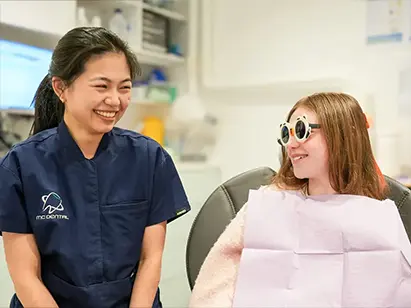
At MC Dental, we make kids’ dental appointments fun and relaxed. Our Melbourne team is experienced with little ones and knows how to create positive, gentle experiences. A good first visit at age 1 often means a much braver, happier child at age 5.

How Can I Prevent Tooth Decay in Baby Teeth?
Tooth decay in young children (early childhood caries) is common, but very preventable. Here’s what really helps keep those little teeth healthy:
Feeding habits that help:
- Avoid putting your baby to bed with a bottle of milk, formula or juice. Sugar sitting on their teeth overnight is one of the biggest causes of decay.
- Transition from bottle to a sippy cup between 12-18 months if you can.
- Limit sugary drinks and snacks during the day.
- Offer water between meals to rinse the mouth and reduce sugar exposure.
- After night feeds, gently wipe your baby’s gums or teeth with a damp cloth.
Fluoride is your friend:
Fluoride strengthens enamel and helps stop decay. Melbourne’s tap water contains fluoride, which gives kids’ teeth an extra layer of protection.
- For babies under 18 months: brush with water only.
- After 18 months: use a tiny smear of low-fluoride children’s toothpaste, as mentioned earlier.
Regular check-ups matter:
Seeing us every six months lets the dentists spot early changes (like small white patches that can be early signs of decay) and apply protective treatments such as fluoride varnish or fissure sealants when needed. Finding issues early means easier, more comfortable fixes, and healthier little smiles.

How do I know if My Child Qualifies for Free Dental Care
Remember to check if your child is eligible for government dental assistance.
The Child Dental Benefits Schedule (CDBS) provides up to $1,132 in benefits over two years for eligible children aged 2-17. This covers:
- Check-ups and examinations
- X-rays when needed
- Professional cleaning
- Fissure sealing (protective coating on back teeth)
- Fillings
- Extractions
- Root canals
MC Dental accepts CDBS. You can check eligibility through myGov, or consult our team when you book.
Why Choose MC Dental for Your Child’s Dental Care
We understand that your child’s early dental experiences can shape how they feel about dentists for the rest of their life. That’s a big responsibility, and it’s one we take seriously.
Here’s what sets us apart:
- Experienced with kids: Our team knows how to communicate with children in ways that feel safe, friendly, and reassuring.
- Patient and gentle: We move at your child’s pace. No rushing, no pressure, just calm, supportive care.
- Prevention-focused: We focus on education and early intervention, helping prevent problems long before they start.
- Support for parents: You’ll get clear, practical guidance so you feel confident caring for your child’s teeth at home.
- Convenient locations across Melbourne: With 6 clinics across the city, there’s likely an MC Dental near you.
- Family-friendly appointment options: Most of our clinics are open 7 days a week (Brighton open 6 days). Plus we offer evening and weekend appointments, and at least one of our clinics is open on public holidays, making dental care easier to fit into busy family life.
Book Your Child’s First Dental Visit
Ready to start your child’s dental journey? MC Dental has six convenient locations across Melbourne:
- Melbourne CBD – perfect for city families and parents working in town
- Docklands – serving nearby suburbs and waterfront communities
- Glen Waverley – easy access for eastern suburbs families
- Westfield Doncaster – central for families in the north-east
- Brighton – serving bayside families
- Highpoint Shopping Centre – convenient for western and northern suburbs
No matter where you are in Melbourne, there’s an MC Dental clinic within reach.
Get in touch:
- Call any of our 6 locations 03 8608 8968
- Book online by clicking one of the below locations
From that first tiny tooth to the teenage years, MC Dental supports Melbourne families with skillful, gentle dental care at every stage. Let’s give your little one’s smile the best possible start!
FAQ – Baby Teeth
Yes, it’s uncommon, but totally possible. Some babies get their first tooth at 3-4 months, while others won’t see a tooth until close to their first birthday. Both are normal. Babies grow at different speeds, so early teething doesn’t mean anything is wrong (or that more teeth will appear quickly).
Early teething signs can be subtle. Common ones include:
-
Extra drooling
-
Chewing on hands, toys, or anything they can reach
-
Red or swollen gums
-
A bit more irritability
-
Trouble settling or shorter naps
These are normal. What’s not teething: high fever, vomiting, or severe diarrhea – please check with a doctor or a dentist.
Probably not. Some babies don’t get their first teeth until after their first birthday. If your child reaches 15 -18 months with no teeth at all, we’ll want to check that everything’s developing properly. But at 10 months, it’s still completely normal.
The first stage is called the “pre-teething” stage, when teeth start moving under the gums. Babies may drool more, chew on everything, and their gums may look bumpy or slightly swollen. This stage can start weeks, even months, before the first tooth actually breaks through. The very first tooth to erupt is usually a lower front tooth.
Baby teeth often appear a little wonky at first. They usually straighten out as more teeth come in and the jaw grows. We’ll keep an eye on alignment at check-ups, but in most cases, there’s no cause for concern at this stage.
This is likely an eruption hematoma. It can look alarming, but it’s usually harmless and disappears as the tooth breaks through. If you’re concerned, bring your child in, a quick check can give you peace of mind.
Teeth grinding (bruxism) is very common in babies and toddlers, especially when new teeth arrive. most grow out of it as their jaws and teeth develop.
You can help by:
-
Making sure they’re not chewing on anything too hard
-
Keeping a calming bedtime routine
-
Checking their teeth at regular dental visits so we can monitor any wear
It’s a developmental phase, so no definite reason to “stop” it. If the grinding is loud, constant, or you’re worried, bring them in and we’ll check everything is healthy.
All 20 baby teeth eventually fall out. Kids usually start losing them around age 5 or 6, and the process continues until around 11-12 years old. The order usually mirrors how the teeth came in, with the lower front teeth usually the first to go. Every child’s timing is slightly different, so don’t stress if your child’s teeth fall out a little earlier or later.
Questions about your child’s teeth? Our Melbourne dental team is always happy to chat. Reach out to any of our clinics, we’re here to make baby dental care simple, safe, and stress-free.